Callnovo
Industries
Products
Services
How We ThinkCompliance
Company

healthcare

Patients need answers now, not after hold music

AI agents handle appointment scheduling, prescription refills, and insurance questions in 65+ languages, while HIPAA-trained specialists manage clinical escalations.

The short version: HIPAA-compliant answering with a named, dedicated agent from $5.80 an hour — named matters here, because "who took that call and what did they say" is a question you may have to answer months later. We sign a Business Associate Agreement. A shared live team from $300 a month and AI voice at $0.15 a minute for scheduling and refills are both available; a person handles anything clinical, including the 3am decision about waking the on-call physician.

Clinical staff at a modern medical clinic reception

how it plays out

A patient calling after the office closed.

Phone Spanish

"I need to schedule an appointment"

Appointment scheduling drives the majority of inbound calls

  1. AI checked provider availability across 3 locations
  2. Offered Tuesday at 2pm or Thursday at 10am slots
  3. Patient selected Thursday via text confirmation
  4. Sent pre-visit forms and insurance info request
Handled without escalation appointment booked
Web Chat Mandarin

"I need to refill my prescription"

Prescription refills are highly repetitive and automatable

  1. Patient identified via date of birth and name match
  2. AI verified prescription was eligible for refill
  3. Sent refill request to pharmacy system automatically
  4. Confirmed pickup time and location via chat
Refill submitted no staff involvement needed
Phone Vietnamese

"Is this procedure covered by my plan?"

Insurance eligibility questions require real-time lookup

  1. AI collected member ID and procedure code from caller
  2. Queried insurance eligibility system in real time
  3. Explained copay and deductible in Vietnamese
  4. Transferred to billing specialist for complex benefits question
Eligibility confirmed warm handoff for billing detail
SMS English

"I need to cancel my appointment tomorrow"

Last-minute cancellations create costly schedule gaps

  1. AI confirmed the appointment details with patient
  2. Offered rescheduling options before processing cancellation
  3. Patient chose to reschedule to following Monday
  4. Updated EHR calendar and sent confirmation text
Rescheduled schedule gap avoided

the team behind it

The people who decide what reaches the on-call.

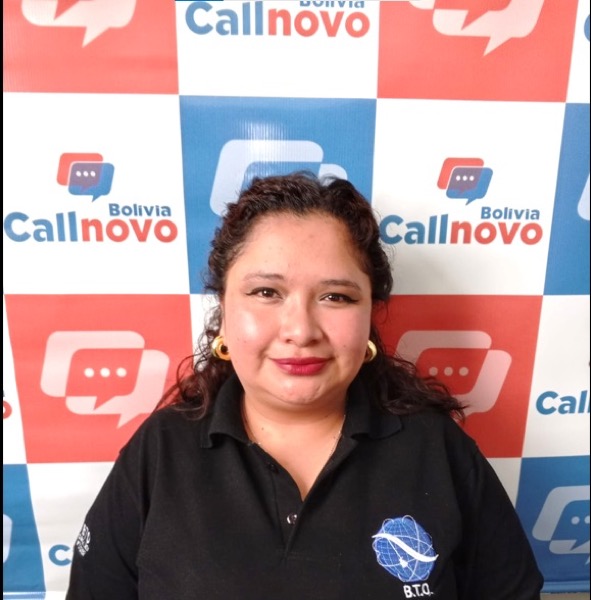
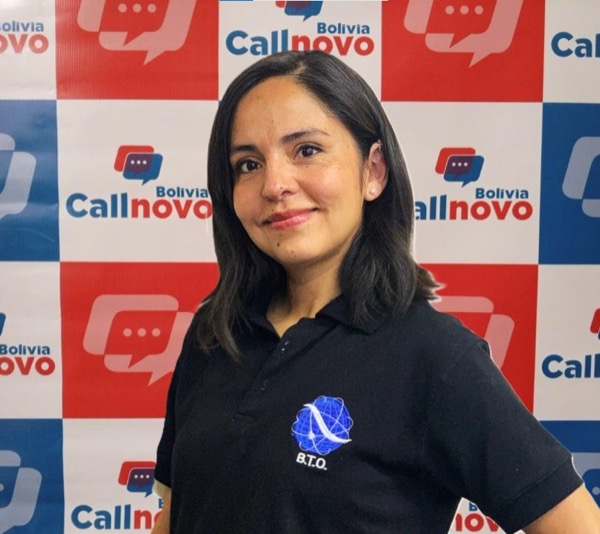
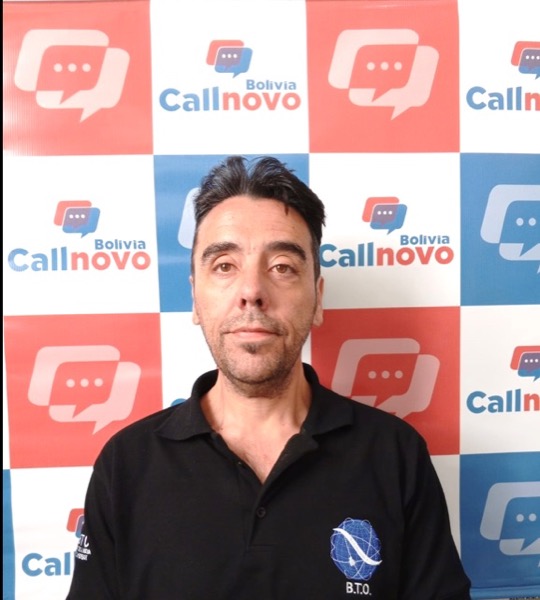
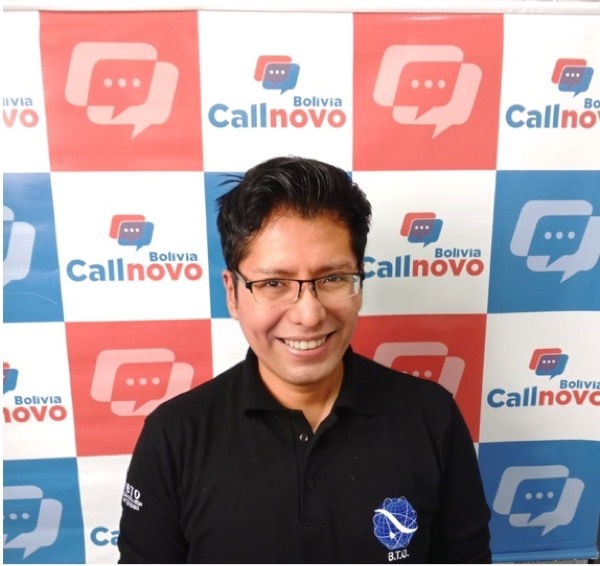
Callnovo agentCallnovo agentCallnovo agentCallnovo agentCallnovo agent real members of the global team

HIPAA-Trained Specialists

  • HIPAA certification and annual refresher training for all staff
  • Clinical triage protocols for symptom-based calls
  • EHR system navigation and patient record coordination

65+ Languages

  • Native-speaking agents in English, Spanish, Mandarin, and 60+ more
  • Real-time AI translation for rare language pairs
  • Cultural context training for every market we serve

Follow-the-Sun Coverage

  • Operation centres in Canada, Bolivia, Nicaragua, the Philippines and China
  • Smooth handoff between time zones with shared context
  • Holiday and weekend coverage without overtime costs

the part nobody prices in

The question is never "can you take a message". It is "what did you not escalate".

Every answering service can write down a name and a callback number. For a medical practice the entire risk sits in the calls that were handled correctly and quietly — and the one that was not.

A patient describing chest pain, a post-operative patient describing a fever, a parent describing a child who will not wake properly. Those calls do not need a message taken. They need somebody who recognises the pattern, follows your protocol, and either reaches the on-call physician or tells the caller to hang up and dial 911.

So we do not automate triage, and we will not pretend to. AI handles appointment scheduling, refill requests, directions, hours and insurance questions — high volume, low risk, right answers exist. Everything with a symptom in it reaches a person working from your protocol, and every call is logged with a timestamp so there is a record if anyone ever asks.

where AI should not be

The calls we will not put a bot on.

Anything with a symptom in it

Chest pain, shortness of breath, bleeding, high fever, a post-op complication, a mental-health crisis. These reach a person following your protocol. Nothing about a symptom description belongs in an automated flow, no matter how good the model is.

Deciding what wakes the on-call at 3am

This is the judgment your practice is actually buying. A person weighs the symptom against your escalation rules and the patient's history, and either calls the physician or does not. That decision has to be defensible afterwards, which means a person made it.

Anything that sounds like an emergency

A person says clearly: hang up and call 911. Then documents the time it was said. Automation hesitates, asks a clarifying question, and loses the minute that mattered.

Results, diagnoses and clinical advice

We do not read results, interpret numbers, or advise. Ever. A person takes the request, records it, and routes it to your clinical staff — and says plainly to the patient that clinical questions come from the practice.

what comes off the call

What your on-call receives, and what is documented.

Medical intake is a legal record as much as a message. Every call comes back written down, timestamped, and handled under HIPAA-compliant procedures:

  • Patient name, date of birth and callback number, verified against your identification rules
  • Whether they are an existing patient and which provider they see
  • Reason for the call in the patient's own words, not paraphrased
  • Onset and duration — when it started and whether it is getting worse
  • Whether any of your red-flag symptoms were mentioned, flagged explicitly
  • Current medications and allergies where relevant to the call
  • Pharmacy of record for refill requests
  • What the agent told them to do, and the exact time it was said

You get it by secure message and, where you run one, into your practice system. The timestamp matters as much as the content — if a call is ever reviewed, "what was said and when" is the whole question.

what it costs

Published rates, so you can do the arithmetic first.

Most vendors in this category quote by form. These are our published packages — not a quote, since language mix, hours and volume all move the number. The per-minute figures are simply the monthly price divided by the included minutes.

OptionPublished pricePer minuteWhat it's for
Dedicated agent from $5.80 per hour, per agent Your protocol, your escalation list, one team that knows your providers
AI voice $0.15 per minute Appointment scheduling, refills, directions, hours, insurance and billing questions
Web chat $0.05 per session Patient portal help and form requests from your website
Live shared team from $300 / month includes 500 min → ≈ $0.60/min After-hours and weekend cover so a symptom call reaches a person
Live shared team from $650 / month includes 1,500 min → ≈ $0.43/min Peak season — flu, allergy, back-to-school physicals

Anything involving a person is a starting price. Two things move it: which languages you need, and how senior an agent the work actually requires — a bilingual agent handling refund authority is not the same hire as one taking bookings. AI voice and web chat are flat, because there is no hiring in them. And every model above is open to every business on this page: which one fits is a question about the shape of your volume, not about your industry.

Minimum engagement is half a seat — not a five-seat block. We also bill per resolved issue, from $1, where you pay nothing if it is not resolved; that model fits businesses where a customer problem actually gets solved on the call, not businesses where the call is intake.

who takes which call

Route by the cost of getting it wrong.

Most vendors sell you either an AI receptionist or a live answering service and leave the allocation to you. Since we run both, here is the split we would actually recommend — including the calls we think should never touch automation.

The callRoute toCost of getting it wrong
Booking, moving or cancelling an appointment AI An annoyed patient
Prescription refill request to the pharmacy of record AI A slower refill
Hours, directions, parking, which insurance you accept AI A lost new patient
Any description of a symptom Human The one call that should have been escalated
Deciding whether to wake the on-call physician Human A judgment that has to be defensible afterwards
Anything that sounds like an emergency Human The minute between "call 911" and a clarifying question

do the arithmetic yourself

The cost you are comparing against is not a salary.

Practices usually benchmark an answering service against the hourly cost of after-hours coverage, which makes from $5.80 an hour look like a straightforward substitution. That is not the comparison that should decide it.

The comparison is against one call that was taken badly and not written down. A symptom described at 11pm, not escalated, not logged — and six months later the only record of what your practice said is the patient's memory of it. That is the exposure, and it is not measured in hours.

So the question we would ask is not "what does coverage cost per hour", it is "how many contacts left your practice last month with no timestamped record of what was said". We do not have to invent a number for that. Your own after-hours log either has it or it does not.

setup

Five days to put the right person on it.

Five days is our normal window to staff a live account — that is five days to find and place an agent who fits your business, not five days of software setup. AI voice can go live sooner because there is no hiring step.

your existing software

It goes into your system, with a record of who said what.

We work inside the CRM, practice system or case tool you already run, rather than handing you a second inbox to check. Every contact leaves a timestamped record — who called, what was asked, what was said back, what was promised — because in your line of work the question six months later is not "did someone call" but "what exactly did we tell them". Tell us what you run and we will say straight whether we connect to it today.

a model we're not selling you

We will not sell a clinic an AI-only line.

We run AI voice, we publish its price, and for scheduling, refill requests and directions it does a genuinely good job. We will not configure it as the only thing on a clinical line. The judgement a triage call needs — is this the chest pain that wakes the physician, or the chest pain that waits for morning — is exactly the judgement automation is worst at, and a confident wrong answer here is not a bad customer experience, it is a patient.

We also do not quote healthcare per resolution, even though we offer it from $1 per resolved issue. In a clinic the phone is intake and triage: the resolution happens later, in an exam room, by someone with a licence. Billing on "resolution" would mean billing on something we do not control.

What we do commit to is narrower and checkable: a signed Business Associate Agreement, HIPAA-compliant procedures, named agents on your account, and a timestamped record of every contact — who called, what was asked, what was said back, what was escalated and to whom. ⚠️ We do not claim any third-party security certification, and you should be sceptical of vendors in this category who do without showing you the report.


when we're the wrong choice

Three cases where you should hire someone else.

  • You need clinically licensed triage nurses on the phone. We are trained to follow your protocol and escalate, not to triage clinically. If your practice requires an RN making clinical assessments on every after-hours call, that is a nurse triage service, and it is a different purchase.
  • Your compliance team requires certifications we have not discussed. We work under HIPAA-compliant procedures. Before you sign anything, tell us exactly what your compliance team needs to see — agreements, audits, certifications — and we will tell you straight what we can provide and what we cannot.
  • You are a single-provider practice with low after-hours volume. If the phone rings twice a week after close, a traditional on-call rotation with a good voicemail greeting may genuinely be cheaper. The maths starts working when after-hours volume is enough that missed calls become missed patients.

questions

What buyers ask before they sign.

How much does it cost?

AI voice is $0.15 per minute and web chat is $0.05 per session. Live agents start at $300 per month including 500 minutes — about $0.60 per minute — or from $5.80 per hour for a dedicated agent working only your account. The minimum engagement is half a seat, not a five-seat block.

How fast can you start answering our phones?

Five days is our normal window to staff a live account — that is five days to find and place an agent who fits your business, not five days of software setup. AI voice can go live sooner because there is no hiring step.

Do you answer in Spanish?

Yes, on the same number, with agents in our Bolivia and Nicaragua operation centres — native Spanish, not machine translation. English and Spanish share one queue, and we cover 60+ more languages if you need them.

Can I mix AI and live agents on one number?

That is the normal setup. You decide which call types go to AI and which reach a person, and you can change the split as your volume changes. Nothing about that decision is locked in at signup.

Is the service HIPAA compliant?

Yes. Calls are handled under HIPAA-compliant procedures, agents are trained on patient privacy, and every call is documented with a timestamp. Before you sign anything, tell us exactly what your compliance team needs to see — specific agreements, audits or certifications — and we will tell you straight what we can provide.

Who decides whether to wake the on-call physician?

A person, working from the protocol you give us. You define the red-flag symptoms, who is on call, how they are reached, and what happens if they do not answer. We follow your list rather than a generic one, and we document what was decided and when. We do not triage clinically and we do not give medical advice.

compliance

HIPAA & Healthcare Compliance

  • Business Associate Agreement (BAA)
  • Encrypted data storage and transmission
  • Annual HIPAA training certification
  • Role-based access with a per-agent audit trail

start

Stop losing patients to voicemail

See how healthcare organizations reduce no-shows and increase patient satisfaction