Privacy note: The short operator example is anonymized at the client’s request. Performance metrics reflect results from an active Callnovo partnership. This article is operational guidance, not legal advice.
Key Takeaways
- Australia’s right to disconnect did not create the after-hours guest problem. It made an informal habit harder to keep using as an operating model.
- Vacation rental demand does not follow office hours. Guests compare listings, ask check-in questions, and make booking decisions at night, on weekends, and across time zones.
- The law changes the staffing assumption. Eligible employees can refuse to monitor, read, or respond to out-of-hours contact unless refusal is unreasonable.
- The practical answer is infrastructure, not pressure. A documented after-hours support layer can protect staff boundaries while keeping guest response times competitive.
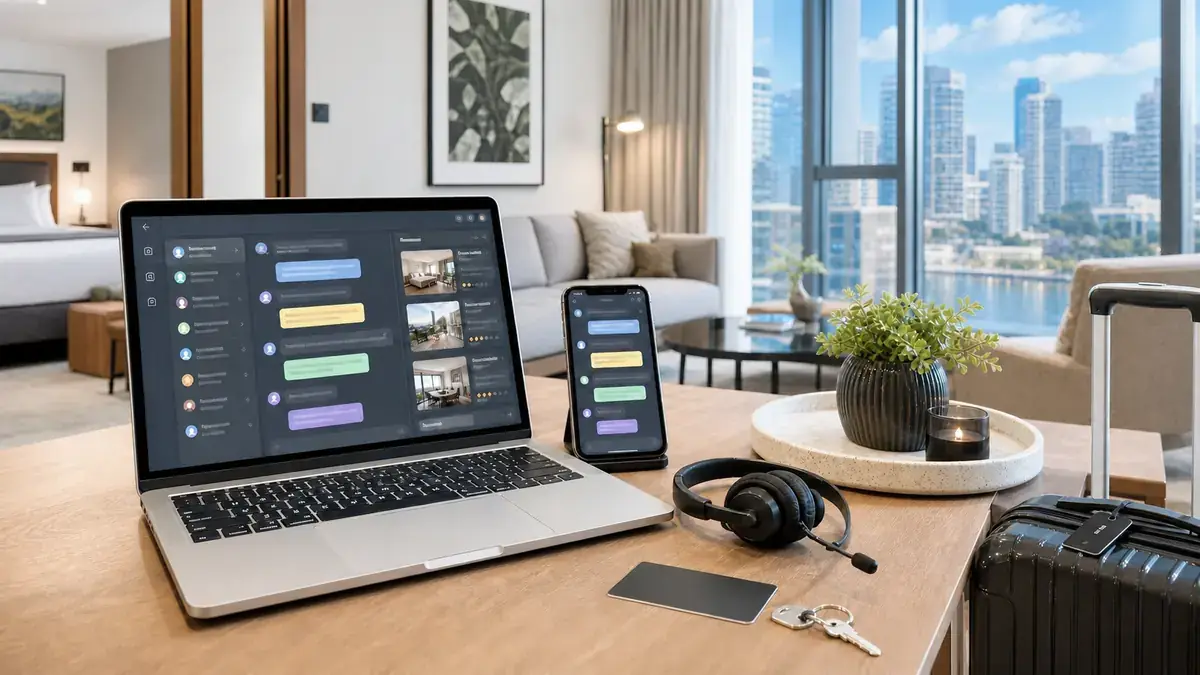
A new law made an old gap impossible to ignore
Australia’s right to disconnect gives eligible employees the right to refuse to monitor, read, or respond to employer or third-party contact outside working hours, unless that refusal is unreasonable.
That does not mean employers are banned from contacting employees after hours. Fair Work says whether refusal is unreasonable depends on factors including the reason for contact, how contact is made and how much disruption it causes, whether the employee is compensated or on-call, the nature and responsibility level of the role, and the employee’s personal circumstances.
The right applies to employees. Vacation rental operations can involve owner-operators, contractors, cleaners, property managers, platform partners, and mixed working arrangements, so operators should review their specific employment arrangements, awards, and agreements with counsel or advisers.
For employees of non-small business employers, the right started on 26 August 2024. For small business employees, it started on 26 August 2025. By 2026, vacation rental operators across both categories need to treat the issue as a live operating constraint, not a future compliance question.
The important point is that the law did not create the problem. Guests were already messaging at night. Property managers were already checking phones after dinner. Weekend inquiries were already being answered by whoever happened to notice them.
The law made that informal model harder to defend.
A family in Shanghai compares Sydney apartments after work. It is 10:45 PM in China and after midnight in Sydney during part of the year. They ask whether late check-in is possible, whether the second bedroom has two single beds, and whether the building has lift access for grandparents.
If the answer arrives the next business day, the guest may already have booked somewhere else.
For short-term rental (STR) operators and property managers running listings on Airbnb and Booking.com, the question is not whether guests should respect business hours. The question is whether the business has a system for the hours when guests actually make decisions.
Why in-house after-hours coverage is harder than it sounds
The instinctive answer is to hire more staff or adjust rosters.
That sounds simple until the numbers and management burden become real.
Legitimate after-hours and weekend coverage in Australia has to account for applicable awards, enterprise agreements, penalty rates, supervision, fatigue, role boundaries, and escalation rules. Replacing informal phone-checking with a compliant roster is not the same as asking one property manager to “keep an eye on messages.”
For small and mid-sized vacation rental operators, the demand pattern also works against a clean internal model.
The busiest inquiry windows are often concentrated: evenings, weekends, public holidays, school holiday planning periods, and the hours when international guests are awake in their own time zones. Building a permanent internal team around those peaks can leave the business overstaffed in quiet periods and still undercovered when multiple inquiries arrive at once.
Night work is also difficult to recruit and retain. A staff member answering guest messages alone at home may not have the full property record, rate policy, calendar context, access instructions, maintenance notes, or escalation authority. That is how small errors happen: the wrong answer about bed configuration, a check-in exception promised without approval, a guest complaint logged in the wrong place, or an emergency escalated too late.
The old model was cheap because the real cost was hidden inside staff goodwill.
Once that goodwill can no longer be treated as capacity, the business has to design an actual after-hours support layer.
The China market makes the timing problem concrete
China is again one of Australia’s most important inbound visitor markets. According to Tourism Australia’s latest China market snapshot, arrivals from China crossed the 1 million mark for the year ending December 2025, up 17% compared with 2024. Chinese travellers also generated a record A$12.3 billion in total visitor expenditure for the year ending September 2025, and China ranked second in arrivals and first in total visitor expenditure.
Source: Tourism Australia market insights snapshot - China.
Not every dollar of that spend turns into vacation rental demand. Education-related travel is a major part of the China expenditure total. But for accommodation operators, the operational implication is still obvious: Chinese travellers, family visitors, and multi-generation groups represent a large, high-value, time-zone-sensitive audience.
They often research accommodation carefully before committing. They ask about room layout, mattress type, kitchen equipment, lift access, parking, distance to transport, child-friendly details, check-in timing, refund rules, and nearby services. These are not nuisance questions. They are risk-reduction questions before a significant travel purchase.
This is not only a translation challenge.
A guest asking in Chinese is not simply looking for English words converted into Mandarin. They are looking for reassurance that the operator understands what matters: whether elderly parents can move comfortably through the property, whether the location is convenient for a first Australia trip, whether late arrival after an international flight will be handled smoothly, and whether the answer is specific enough to trust.
That requires cultural fluency, accurate property knowledge, and a fast response window.
When a property can answer promptly in Chinese, with details that sound like the team actually knows the apartment, it has an advantage over a competitor that sends a translated template message the following afternoon.
The same logic applies across other markets: guests from Singapore, Korea, Japan, India, Europe, North America, and the Middle East all make decisions outside Australian office hours. The China market simply makes the timing problem easy to see.
What an after-hours support system has to do
For vacation rental operators who have worked with Callnovo, the goal is not framed as “outsourcing your calls.”
The goal is to build the after-hours support infrastructure the business should have had all along: a staffed, documented, bilingual or multilingual operating layer that protects employees’ non-working hours while keeping guest communication alive.
That infrastructure has four practical jobs.
1. Cover the hours your internal team should not have to
Evenings, weekends, public holidays, and overnight inquiry windows should not depend on a property manager glancing at a phone before bed.
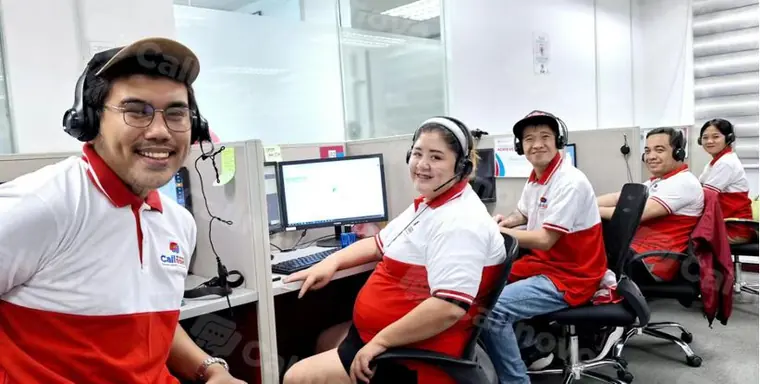
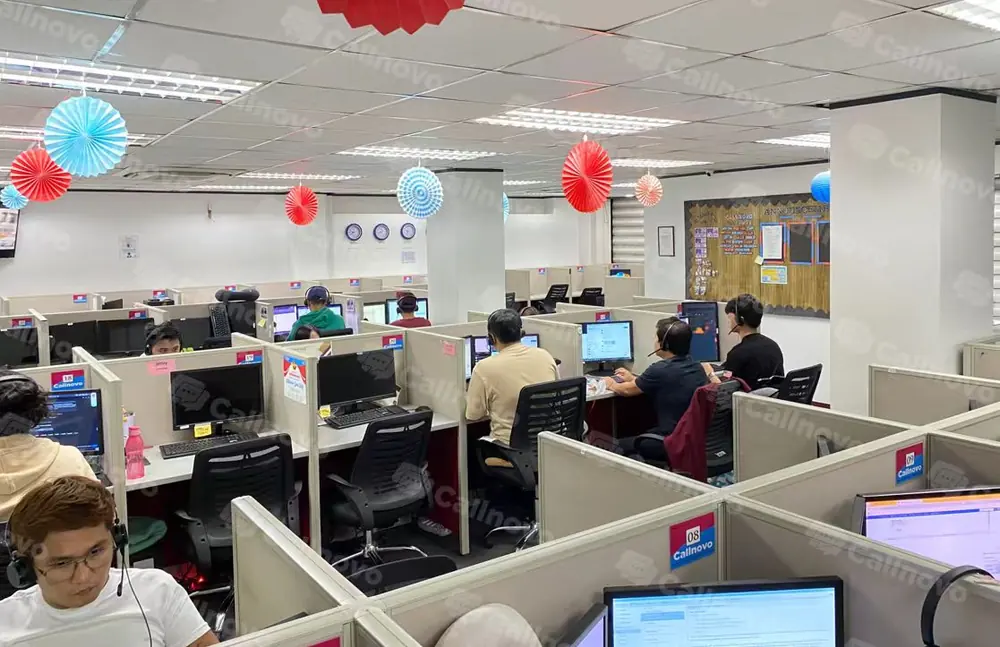
Callnovo’s bilingual support teams cover those windows as scheduled operating capacity. Internal staff work their contracted hours. Guests still receive timely responses. Managers stop relying on after-hours goodwill to keep revenue from leaking.
This matters for compliance, but it also matters for consistency.
A scheduled team can be trained, measured, QA reviewed, and improved. A tired manager answering one more message at 12:30 AM cannot be managed as a reliable process.
2. Triage contacts so every message does not become an escalation
Not every guest message needs to wake a property manager.
Callnovo uses a three-tier SOP so routine questions are handled immediately, non-urgent items are logged cleanly, and only genuine emergencies are escalated outside business hours.
Resolved Directly
Standard booking questions, availability checks, amenity details, check-in logistics, house rules, and local recommendations are answered without involving the property manager.Logged for Morning Review
Requests that need owner approval or information outside the support team’s authority are documented in full, queued for next-business-day handling, and explained to the guest with a clear timeline.Escalated Immediately
Safety issues, lockouts, urgent maintenance failures, active guest distress, and situations requiring direct property intervention trigger the agreed escalation path.This structure changes the manager’s night.
The manager no longer receives an alert because someone asked whether the sofa bed has linens. They receive an alert because there is a lockout, safety concern, water leak, or other issue that genuinely cannot wait.
The guest also gets a better experience. They are not forced to wait for routine answers, and they are not sent into an emergency queue for ordinary questions.
3. Make overnight activity visible
After-hours support should not become a black box.
Every contact needs to be logged: inquiry type, guest language, property involved, response provided, outcome, unresolved item, escalation status, and any guest feedback.
That daily record matters because it turns scattered messages into operational intelligence.
Property managers can see patterns:
- recurring questions that suggest a listing description is unclear
- repeated confusion about check-in instructions
- amenity questions that could be answered with better photos
- complaint themes pointing to cleaning, maintenance, or access issues
- booking friction that reveals a policy or pricing problem
The value compounds. A night of guest messages becomes a morning operating report. A month of operating reports becomes a map of what the property needs to fix.
4. Bilingual and Mandarin-speaking guest support as reassurance, not decoration
Multilingual support is easy to underbuild.
Many businesses treat it as a translation feature: detect language, translate answer, send response.
For accommodation, that is usually not enough. The guest is making a trust decision. A technically correct but generic answer can still feel risky if it does not address the underlying concern.
A stronger bilingual support model combines language ability with property-specific knowledge and cultural context. The agent knows which details matter to Chinese travellers, which questions require extra specificity, and when to confirm assumptions rather than answer too quickly.
That can change conversion.
A guest who receives a precise answer in their preferred language is more likely to keep the property in consideration. A guest who receives a late or vague answer is more likely to move on.
What changed for one Sydney operator after five months
One Sydney-based vacation rental operator came to Callnovo with a familiar problem: guest communication quality was inconsistent, reviews were drifting downward, and the property manager had been personally fielding after-hours messages for years.
The property itself did not change. Pricing did not change. The core listing did not change.
What changed was the support system around the property.
Callnovo’s bilingual team began answering inquiries promptly and accurately across off-hours windows. Routine questions were resolved directly. Non-urgent items were documented for morning review. Genuine emergencies were escalated according to the agreed protocol. Overnight activity was summarized instead of disappearing into message threads.
Five months later, the operator cleared one metric for publication: booked-night occupancy across the same active Sydney listings was up 25% year over year, measured as booked nights divided by available nights over the same five-month period. Listings added after the baseline period were excluded from the comparison.
The operator also reported fewer after-hours interruptions and better review sentiment. Exact review-score before-and-after numbers were not cleared for publication, so we are not presenting a star-rating delta here.
The operator’s reflection was simple: guests had not been unreasonable. The business had never built a system capable of meeting reasonable expectations consistently.
Once that system existed, the results followed.
What operators should take from this
The Australian law is specific, but the operating challenge is not.
Any hospitality or service business that receives customer inquiries outside business hours needs a real plan for those contacts. A plan is not “someone usually checks.” A plan has coverage hours, authority levels, documented answers, escalation rules, quality review, and reporting.
For vacation rental operators, the stakes are high because the lost revenue is often invisible.
If a guest complains, you can see the complaint. If a guest never books because no one answered, the lost booking often never appears in the data. It becomes a quiet conversion leak.
Before the next peak booking season, ask four questions:
- What happens to guest inquiries that arrive outside your team’s working hours?
- Is the current arrangement documented, staffed, and sustainable, or is it based on individual goodwill?
- Do you know what your after-hours contacts look like by volume, language, topic, and outcome?
- Can you support international guests in the language and time window where they are most likely to make a booking decision?
The right to disconnect gave Australian workers a boundary they deserved. Operators who respond by building proper after-hours support infrastructure may end up with more than compliance. They may end up with a cleaner, calmer, more conversion-ready guest operation.
Sources: Fair Work Ombudsman right to disconnect guidance; Tourism Australia market insights snapshot - China; Tourism Research Australia international tourism results.
Build the support layer before the next midnight booking
Guests will keep booking at night. They will keep asking detailed questions before they commit. They will keep comparing properties across tabs, apps, and languages.
The question is whether your operation is present when that decision happens.
Callnovo helps vacation rental and hospitality businesses build that presence with bilingual support teams, after-hours coverage, triage SOPs, managed customer support, daily reporting, and HeroDash visibility.
If your staff should be disconnected, your guest support system should not be.