Key Takeaways
- Many COD refusals are not fraud. Some buyers forgot, changed their mind, missed the delivery window, or did not realize a family member placed the order.
- The expensive mistake is shipping before intent is confirmed. A $90 fashion order can lose $30 to $50 once outbound freight, fees, and return handling are counted.
- Manual confirmation calls work, but they do not scale cleanly. Time zones, contact windows, repeat-refusal rules, and call consistency create a throughput ceiling.
- HeroDash AI Voice turns COD confirmation into an operating system. It calls buyers before shipment, records intent, flags risky orders, and gives the warehouse a ship-or-hold decision.
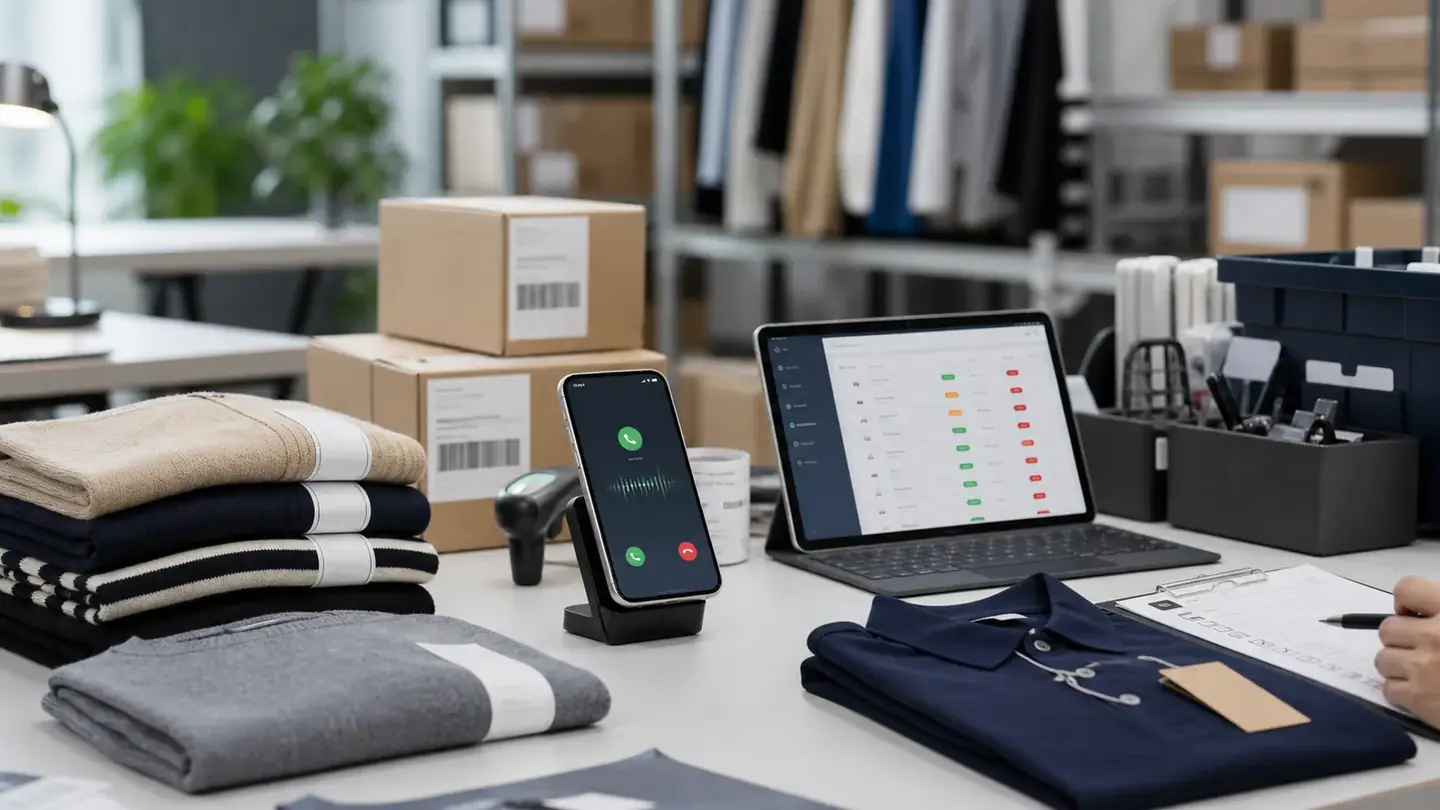
The decision every COD seller faces every day
An order comes in from California: three summer T-shirts, total value $89.90, cash on delivery.
Do you ship it?
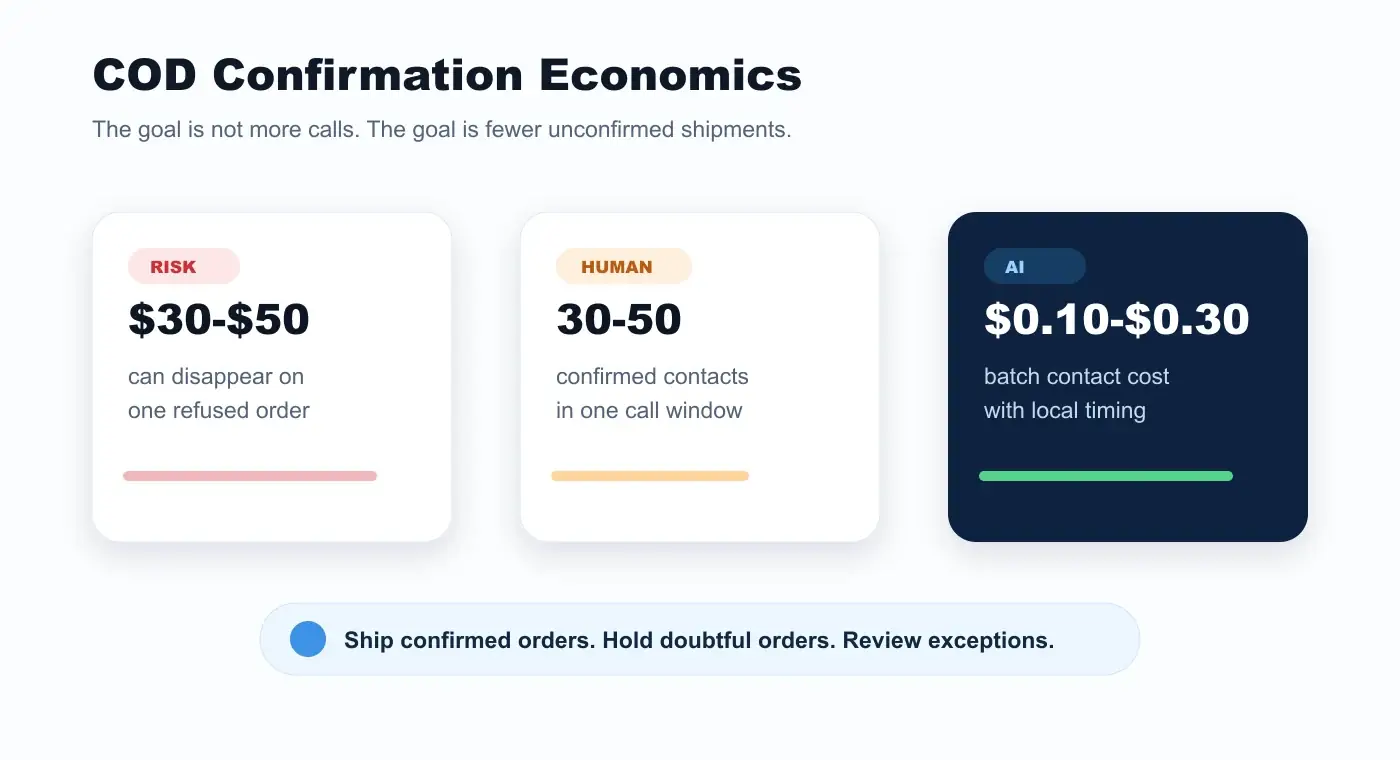
If you ship and the buyer refuses delivery — a return-to-origin (RTO) event — the margin disappears fast. Outbound international shipping may be $25. Customs or COD handling fees can stack on top. If you want the goods back, return logistics may add another $20. Many sellers do not even recover low-ticket fashion inventory once the return cost gets close to the product value.
If you do not ship, you lose a valid sale.
This is the daily COD dilemma. Fashion sellers want the conversion lift that COD can create, but every unconfirmed order carries a hidden logistics bet. Shopify’s COD explainer frames the core issue simply: the customer pays only after delivery, so the retailer carries shipping risk before payment is guaranteed. The USPS domestic mail manual makes the operational side plain as well, treating refused or undeliverable COD parcels as a return-postage responsibility for the sender.
For COD fashion sellers, the question is not only “Is this buyer fraudulent?” It is often simpler: “Does this buyer still want the order before we spend money shipping it?”
The COD refusals and RTO that better fraud detection misses
Fraud detection is useful. It can flag suspicious addresses, unusual order patterns, mismatched data, and known abuse. But it does not catch the ordinary reasons COD orders fail.
Some buyers place an order and forget. Some are not home when the driver arrives. Some decide the color, size, or occasion no longer works. Some orders are placed by a relative, roommate, or assistant who never tells the person who answers the delivery call. Some buyers simply need to hear the price, delivery timeline, and COD requirement again before they remember what they ordered.
In COD-heavy operations, a practical planning threshold is that a meaningful slice of refusals may be preventable RTO. The exact range varies by country, category, price point, and courier process, but many sellers watch the 15% to 30% band as an internal operating signal because it is where “normal leakage” can become an expensive margin problem.
That leakage cannot be fixed by a better return policy. The order has already shipped. The cost has already been triggered.
The fix is a confirmation step before shipment.
Why human confirmation calls break at scale
Pre-shipment confirmation calls are not a new idea. A good human agent can call the buyer, confirm the name, order, amount, delivery expectation, and willingness to pay. If the buyer says yes, the warehouse ships with more confidence. If the buyer says no, the seller avoids a preventable loss.
The problem is coverage.
An English-speaking agent making COD confirmation calls during a three-hour optimal contact window might confirm 30 to 50 buyers. That window matters. Buyers are usually easier to reach in local afternoon or early evening, not whenever the seller’s back office happens to be online.

Now add real COD scale:
- orders across US Eastern, Central, Mountain, and Pacific time;
- Canada, the UK, and Australia with different local call windows;
- voicemail behavior that varies by market;
- accents and call comprehension differences;
- repeat buyers with refusal history who need a stricter script;
- supervisors who need evidence, not just a note saying “called.”
At a few dozen COD orders per day, a manual process can work. At hundreds of orders per day, the math becomes awkward. You either hire a large calling team for a narrow time window, skip many calls, or call inconsistently enough that the refusal problem keeps leaking.
What HeroDash AI Voice does differently
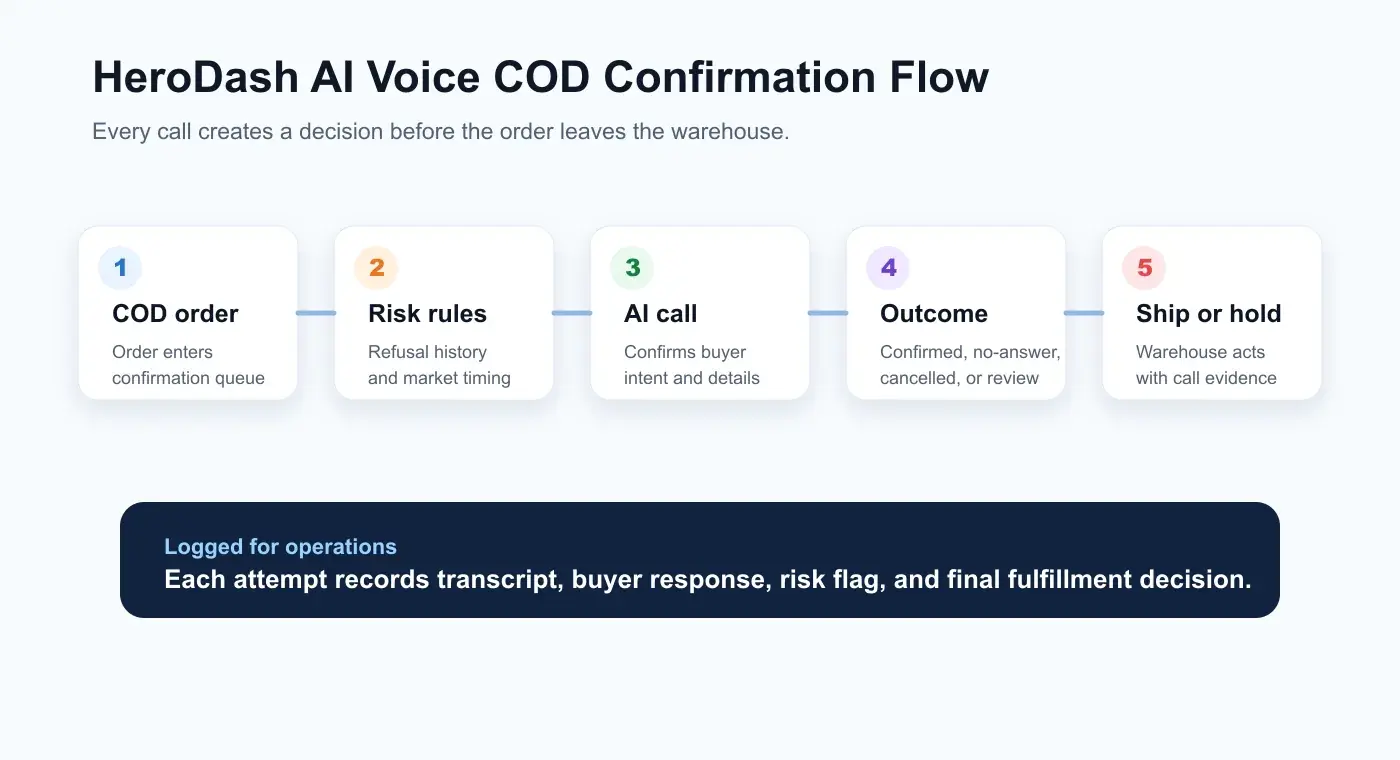
HeroDash AI Voice automates the pre-shipment confirmation call and ties the result back to the order queue. In Callnovo’s product stack, HeroVoice handles the call; HeroDash records outcomes and routes fulfillment decisions.
It does not replace every customer service conversation. It handles one narrow, high-volume workflow: confirm whether a COD buyer still wants the order before the seller pays to ship it.
That narrowness is the point. The call has a clear objective, a structured script, and a small set of outcomes:
- The buyer confirms the order.
- The buyer does not answer.
- The buyer cancels or says they no longer want it.
- The buyer needs a human follow-up.
- The buyer has refusal history and should trigger stricter rules.
For sellers, this creates a cleaner operating signal. Instead of treating every COD order as equally shippable, the team gets a pre-fulfillment decision.
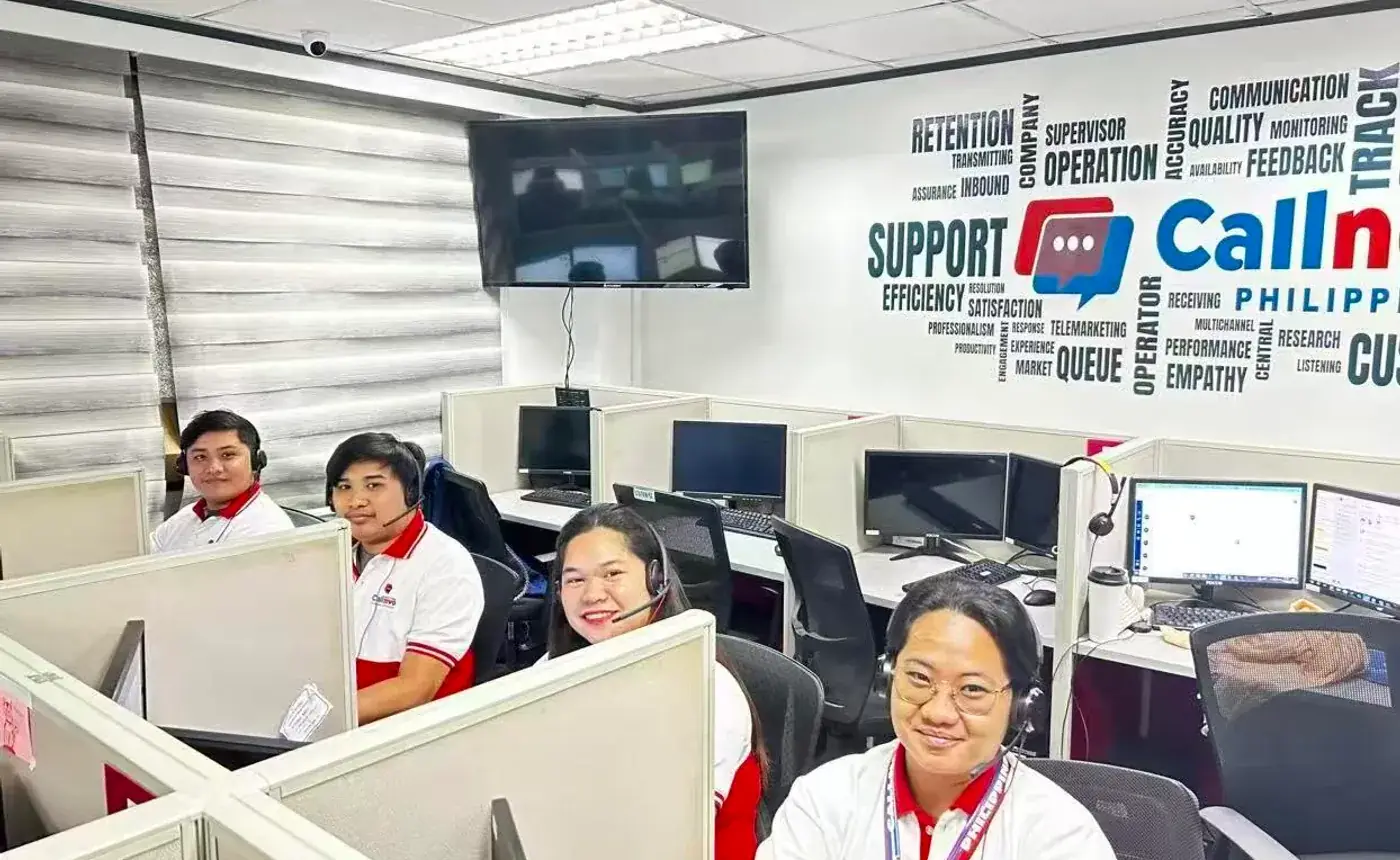
Automated confirmation also works better when it is connected to a real support operation. AI Voice handles the repetitive decision. Human agents and supervisors handle exceptions, disputed orders, confused buyers, and quality review.
A real confirmation call pattern
A COD confirmation call does not need to be long. It needs to be precise.
AI Voice: “Hello, this is an automated confirmation call from FashionHub. Am I speaking with Michael Johnson?”
Buyer: “Yes, speaking.”
AI Voice: “We show you recently placed a COD order for two Tech Cargo Shorts in Army Green, size L, total $67.98. Is that correct?”
Buyer: “Yes, that’s right.”
AI Voice: “Because this account has previous COD refusals, we need a final confirmation before releasing this shipment. Do you still want this order?”
Buyer: “Yes, I still want it.”
AI Voice: “Your order will be delivered within 7 to 14 business days. Please have the exact amount ready. Thank you.”
The call takes under 90 seconds. The buyer hears the item, price, and delivery expectation. The refusal-history rule is stated clearly. The order can now be marked confirmed with evidence.
If the buyer does not answer, HeroDash can leave a structured voicemail and log the attempt. If the buyer says they no longer want the product, the shipment can be held. If the buyer sounds confused or disputes the order, the case can route to a human team.
The cost picture
The strongest argument for COD confirmation is not abstract customer experience. It is margin protection.
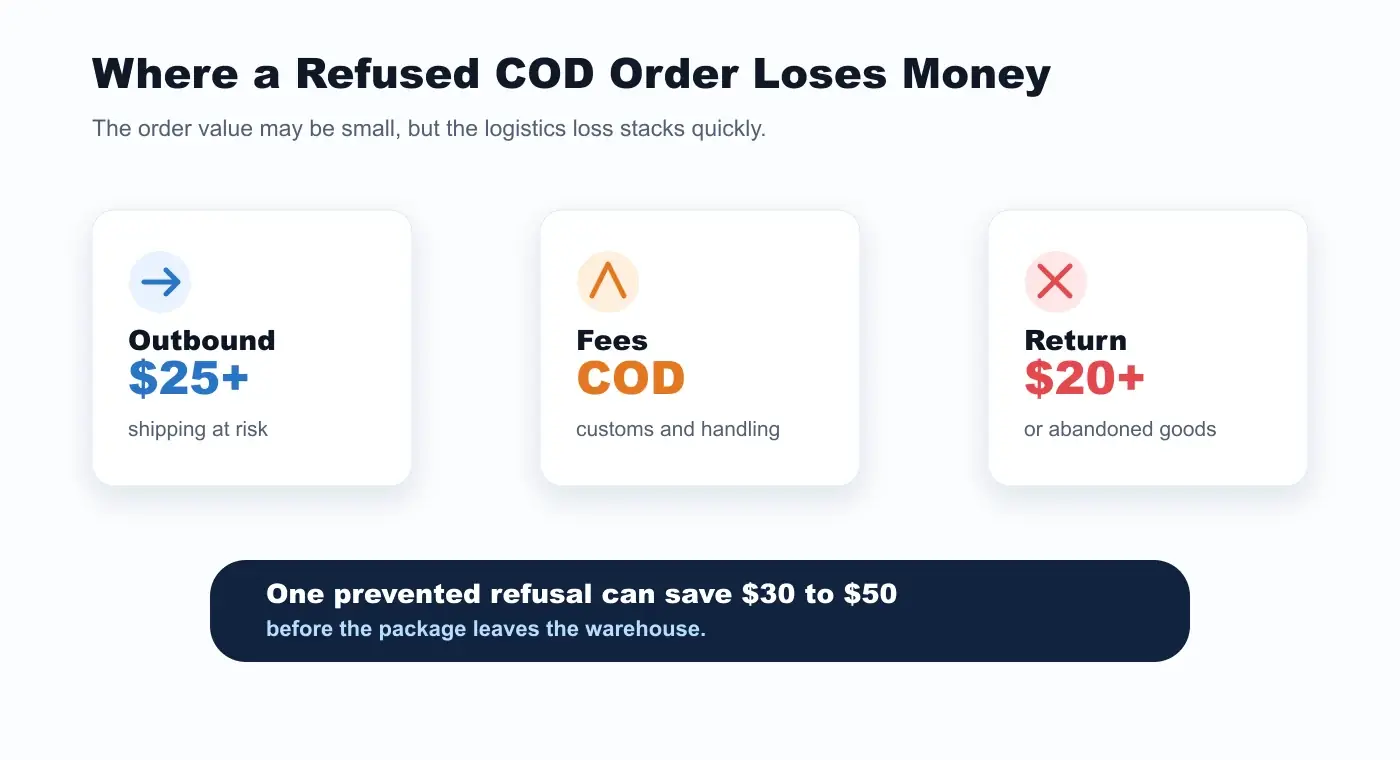
If an AI call falls in a typical batch-cost planning range of about $0.10 to $0.30 per contact, depending on telephony, market, and model setup, the break-even point is low. Prevent one refused order and the avoided loss can cover a large number of confirmation calls. Even if only a small percentage of calls stop invalid shipments, the economics can still work because the downside of a refusal is so much larger than the cost of a call.
This is especially true for fashion, where order values are often modest and return recovery is messy. A high-margin apparel item on paper can become a negative-margin order once outbound freight, failed delivery, return handling, and inventory delay are included.
That is why COD confirmation should be measured against logistics loss avoided, not against call-center cost alone.
Where the workflow fits
HeroDash AI Voice is most useful when the COD operation has enough volume and enough leakage to justify automation.
Score the order
Use order value, region, buyer history, address quality, and prior refusals to decide which COD orders need confirmation.
Call in the local window
Place the confirmation call when the buyer is most reachable in their market, not when the warehouse team happens to be online.
Capture the outcome
Save transcript, answer status, buyer intent, cancellation reason, and any refusal-history warning.
Update fulfillment
Release confirmed orders, hold cancelled orders, and route exceptions to a human support queue.
This process is worth evaluating if:
- your COD refusal rate is above 15%;
- you process more than 50 COD orders daily;
- manual confirmation calls cannot keep up with the best contact window;
- you sell across multiple English-speaking markets;
- repeat-refusal buyers are still being shipped on COD without a second check;
- warehouse teams need a clearer ship-or-hold signal.
What to watch before deploying AI calls
AI Voice is not magic. It needs the same operating discipline as any other customer workflow.
The order data must be clean. If the AI reads the wrong item, size, or amount, trust drops immediately. The script must be short enough that buyers stay on the line. The refusal-history language must be firm without sounding accusatory. Voicemail rules should match market expectations. Human fallback must exist for confused buyers, disputed orders, high-value orders, and exceptions.
Compliance also matters. Calling rules, consent expectations, caller ID, voicemail wording, and recording requirements vary by market. Sellers should configure call timing and scripts for the countries where they operate, not copy one global script everywhere.
The better question for COD sellers
COD sellers often ask, “How do we reduce refusals?”
A more useful question is, “Which refusals can we identify before we ship?”
That shift changes the entire operating model. The seller no longer waits for the courier to discover buyer intent at the door. The confirmation happens while the order is still controllable. A valid order moves forward. A doubtful order pauses. A repeat-risk order gets a stronger confirmation rule. A confused buyer gets human help before logistics cost is triggered.
For fashion brands running COD across North America, Europe, the UK, or Australia, this can be the difference between a growth channel and a margin leak.
HeroDash AI Voice is built for that pre-shipment layer: high-volume calls, market-specific timing, structured outcomes, and fulfillment decisions that teams can act on. Used well, one phone call before shipment can protect the order economics after shipment.
FAQ
How does AI Voice reduce COD refusals?
AI Voice reduces preventable COD refusals by confirming buyer intent before shipment. If the buyer confirms the order, the warehouse can ship with more confidence. If the buyer cancels, does not answer, or disputes the order, the seller can hold the shipment before logistics costs are triggered.
When should fashion sellers use pre-shipment COD confirmation?
Pre-shipment confirmation is most useful when COD refusal rates are above 15%, daily COD volume is high enough that manual calls cannot keep up, or repeat-refusal buyers are still receiving COD shipments without an additional check.
Does AI Voice replace human support agents?
No. AI Voice should handle the repeatable confirmation workflow. Human agents are still needed for exceptions, disputed orders, confused buyers, high-value cases, QA review, and customer-sensitive situations where a scripted confirmation is not enough.
Learn more about HeroDash, HeroVoice, and Callnovo’s ecommerce support operations.